Saturday, May 17, 2008

Georgia Books--A Literary Travel Guide for Georgia?


Earlier this week, I read an article in the Atlanta Jounral-Constitution about the success that the Georgia Department of Economic Development was having in using Georgia's literary heritage to attract international tourism to Georgia.

The piece appears in the AJC 5/13/08 edition (see 'Georgia entices British travelers with big dose of the South, Gone With the Wind piques interest abroad').

This got me to thinking. Wouldn't it be great to have a Literary Travel Guide for the entire State of Georgia?

So, I sent the following letter to an official at the Department of Economic Development who was named in the AJC article:


Kevin Langston
Assistant Commissioner for Tourism
Georgia Department of Economic Development
75 Fifth Street, NW Suite 1200
Atlanta, Georgia 30308

Dear Commissioner Langston,

I recently read an article in the
Atlanta Journal-Constitution that discussed your agency’s efforts to attract international (and, I assume, domestic) tourists to Georgia using our state’s rich literary history (‘Georgia entices British travelers with big dose of South, Gone With the Wind piques interest abroad’, AJC, 5/13/08). Having spent the past decade in the Georgia book trade—and having spent time as a teacher and director of a small Georgia chamber of commerce—I applaud your efforts to promote our state in this way.

Reading the article, I wondered what the total economic contribution to our state has been from the works of authors Margaret Mitchell, Pat Conroy, James Dickey, Alfred Uhry, Alice Walker, John Berendt, and Tom Wolfe alone. Does your agency maintain such statistics?

When one adds up the total economic contribution of Georgia’s entire literary community over the decades—and centuries—I expect that it would be quite a figure. Georgia’s literary resources (Georgia writers, books by Georgians or about Georgia) are certainly worth shouting about, not just in terms of the works themselves, but also including the personal stories of the authors, the State geography and history associated with their works, the national attention that their collective works have drawn to the State, the film adaptations of their works, and the range of subject matter about which they have written and continue to write.

I am curious to know if the Georgia Department of Economic Development has ever considered—or is perhaps currently considering—the creation of a guide to Georgia’s literary people and places? Some wonderful publications do already exist. One of the best examples must certainly be
The New Georgia Encyclopedia Companion to Georgia Literature by Hugh Ruppersburg and John Inscoe, and published in 2007 by the Georgia Humanities Council and the University of Georgia Press.

However, the example that most readily comes to mind is
The Best of Georgia Farms Cookbook and Tour Book by Fred Brown and Sherri Smith, and published in 1998 by CI Publishing and the Georgia Department of Agriculture. The book is a wonderful collection of recipes, and combines Georgia history, contributions by notable Georgians, illustrations, and relevant and interesting travel recommendations.

Regretfully, and to the best of my knowledge,
The Best of Georgia Farms is no longer in print. This is too bad, as I know from personal experience that it was hugely popular and a regular local interest bestseller. Please let your counterparts at the Department of Agriculture know that the State’s booksellers sorely miss the book. Perhaps the Department of Agriculture would consider a new, updated edition—one that would also take into account the increasing interest in locally produced agricultural products, organic farming, and the drought?

I can assure you that a similar title, devoted to Georgia’s rich literary history, would be hugely popular with Georgia’s booksellers and educators, not to mention Georgia’s writers and publishers. Perhaps it could include writings by some of our State’s notable authors, or information pertaining to important literary sites and venues? The only trouble you would likely encounter would be trying to decide who and what to include in it.

Sincerely,


Some recommended reads:


The Pat Conroy Cookbook by Pat Conroy


Literary Savannah by Patrick Allen


Friday, May 16, 2008

Stay at Home Dad--Field Trip to the Sewage Treatment Plant


As a part-time stay-at-home dad, I am always looking for interesting, educational and fun activities that my three-year-old son and I can enjoy together. Earlier this week he came to me and said that he needed to get out for a while, so I took him on an impromptu field trip to a water treatment facility.

This may sound a little strange for a three-year-old (or most anyone else, for that matter), but I thought that it would be interesting, give him a chance to get out and blow off some steam, and also give me a chance to engage in a few teachable moments. Besides, given the state of affairs with water in our area, I thought that this might give me one more opportunity to talk with him about that issue. Plus, his mom is an environmental and water resources engineer. This would give him another chance to see what mom does for a living.

We went to a local facility that is very hands-on and very kids friendly. In fact, they allow the kids to jump right into the wastewater treatment process (there are, of course, facilities close by to wash hands after playtime). My son loves it, running back and fourth through the coarse debris screen, then hiding from me within the solids and sludge containment area. Of course he would like playing somewhere with a concentration of sludge--he’s all boy. He just squeals when I surprise him by sticking my head through the screen that catches the raw sewage and yell “Ha! Gotcha!” This is what parenting is all about—the moments you’ll always cherish.

He isn’t much interested in the part of the facility where disinfection takes place (again, he’s all boy), though he does like to hang out in the aeration section and watch the bubbles. The only thing that really bothers him is the “rotten egg” smell. There is also a toilet on site that he is allowed to flush over and over and over again. And he does, too.

His older sister, who is in preschool, would be furious with me if she knew that, while she was busy with the serious business of reading, writing, and Spanish, I was letting her brother have a field day in sewage. I can hear it now. “That’s not FAIR!!”

The facility, the Gwinnett Environmental and Heritage Center (about thirty-five miles east of downtown Atlanta), also has many opportunities to get wet, pet a horseshoe crab, visit with a turtle named Bubba, and watch a movie about water conservation that is projected onto a screen that is essentially a waterfall. There are also acres of woods and trails.

Interestingly enough, the facility and its grounds are surrounded by some of the most densely populated and developed land in the state of Georgia. Just as interesting, the facility was paid for in large part by Gwinnett County, Georgia taxpayers. I say “interesting” because, politically, Gwinnett County, Georgia (a suburb of Atlanta) is known as perhaps one of the “Reddest” counties in perhaps the “Reddest” state in the country. I guess it goes to show that you cannot always peg people, or the place from which they come. It’s an interesting place to be at an interesting time, without a doubt.

On the matter of my local tax dollars--and how they are being spent--the new stadium for the Atlanta Braves farm team is going up about three miles from my house. I confess that I like that idea, though we’ll see how I feel about the traffic and etc. when the time comes. I would like to thank Georgia Governor Sonny Purdue for finally giving the thumbs up to beer sales at the new stadium. If my children insist on my playing John Fogerty’s song, ‘Centerfield’ even one more time, I will certainly need one, if not several.

Recommended reads:

The Crackers: Early Days of Atlanta Baseball by Tim Darnell

Taking Lottie Home by Terry Kay

Everyone Poops by Taro Gomi
RMR

Friday, May 9, 2008

Georgia Water--The Chattahoochee Nature Center


This past weekend, my family and I attended the award ceremony for the Annual River of Words arts and writing contest which is sponsored by the Georgia Center for the Book, Project WET, and the Georgia Department of Natural Resources. The award ceremony was being held at the Chattahoochee Nature Center in North Atlanta.


More accurately, my family and I went to the Chattahoochee Nature Center for a visit, and I had hoped to get some photos of the award ceremony, some of the artwork, and perhaps chat with some of the young writers and artisits. As it turns out, we headed out on the trails and more or less missed the ceremony. And by the time we had gotten to the pavilion where the awards were being presented, the card on my digital camera was full. I'll try again next year.


It was such a beautiful day, and our schedules just don't allow us to get out like that as often as we would like, so we seized the opportunity.


It's hard to believe such a place exists so close to some of the busiest and most congested areas in the metro Atlanta area.


Congratulations to this year's winners of the Georgia River of Words competition.


RMR

Georgia Books--Illustrators Laura Knorr and Mark Braught


In case you missed these two talented Georgia illustrators at this week’s annual meeting of the International Reading Association in Atlanta (http://www.reading.org/), be certain to visit their respective web sites at left for information about their work, book titles, and appearances. These two gifted folks are great, especially when they appear together.

Laura Knorr’s most recent book of illustrations is A Isn’t for Fox—An Isn’t Alphabet, written by Wendy Ulmer and published by Sleeping Bear Press in November of 2007.

A Isn’t For Fox gets a big thumbs up from my own in-house staff of book reviewers (daughter, age 5 and son, age 3).

Laura also illustrated The Legend of Papa Noel—A Cajun Christmas Story by Terri Hoover Dunham and P is for Pelican—A Louisiana Alphabet by Anita Pietro. Laura was a big hit across Louisiana last year when her publisher toured her in that state following the release of Papa Noel.

Other titles that Laura has illustrated include:

K is for Keystone—A Pennsylvania Alphabet by Kristen Kane. Some really good people come from Pennsylvania.

The 12 Days of Christmas by Helen Haidle, Virginia Kroll, and Kathleen Long Boston.

If you, your kids, or your school or local library has a chance to visit with Laura, don’t miss it. In addition to being a gifted artist, she’s great with kids and gives a terrific and hands-on presentation about illustration. She also has some pretty hysterical stories about having worked for a large amusement park.

Illustrator Mark Braught’s latest work appears in A Peck of Peaches—A Georgia Number Book written by Carol Crane and published by Sleeping Bear Press in 2007.

If you are not familiar with Sleeping Bear Press’ Alphabet and Number books, you ought to have a look, especially if you have little ones. Of course, they are interesting for adults, as well. Take Mark’s latest book, for instance. I didn’t know that the largest breeding area for sharks in the southeast was in the waters off of Cumberland Island, Georgia. I love Cumberland Island. I will, however, limit my beach activities to looking for shells from now on. Also, I didn’t know that the Foxfire campus in North Georgia has on display the only remaining wagon that is known to have taken part in the deportation of Cherokee during the infamous and utterly shameful Trail of Tears.

Mark Braught’s other books include:

P is for Peach--A Georgia Alphabet Book by Carol Crane.

J is for Jumpshot—A Basketball Alphabet Book by Michael Ulmer.

T is for Touchdown—A Football Alphabet Book by Brad Herzog.

Cosmo’s Moon by Carol Crane.

No Pay, No Way by Holly Huppert.

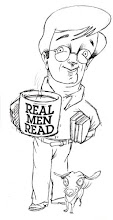
Mark has quite a list of artistic accomplishments, including having created the Official Poster for the Kentucky Derby, and some of the early Harry Potter artwork used by Warner Communications. He also provided the caricature of your humble blogger up in the right-hand corner of this blog’s main page. I am the taller one with the coffee cup.

Mark Braught also gives a terrific presentation on the art of illustration, and is particularly good with kids. Again, be sure to visit Laura and Mark’s websites for a better look at their work.

Mark Braught and Laura Knorr are married and live just outside of Atlanta.


RMR

Friday, May 2, 2008

Georgia Books & Water: Renee Dodd & River of Words


2008 Townsend Prize for Fiction

Belated congratulations to author Renee Dodd on her being chosen for the 2008 Townsend Prize for Fiction. Ms. Dodd received the award last week at a ceremony held at the Old Courthouse in Decatur, Georgia. The Award is sponsored by the Writer’s Institute at Georgia Perimeter College, and is given in honor of Atlanta Magazine founder Jim Townsend. The presenting sponsor for the award is the Georgia Center for the Book.

Ms. Dodd won the award for her debut novel, A Cabinet of Wonders, which tells the story of a traveling sideshow in rural, 1920’s Georgia. She had some pretty stiff competition, too. Pearl Cleage, Karin Slaughter, Terry Kay, Jim Grimsley, Jack Pendarvis, Sheri Joseph, Bob Cupp, Greg Johnson, and Nathan McCall.

Miss Dodd teaches creative writing at Georgia College and State University in Milledgeville, Georgia. She is also the granddaughter of Georgia Tech football legend, Bobby Dodd. She is working on her second novel.

The Townsend Prize is a biannual award presented to a Georgia author judged to have published the best work of fiction during the previous two years.

The 2008 Townsend Prize couldn’t have gone to a nicer person. Congratulations Ms. Dodd.

River of Words

On Sunday, May 4, beginning at 2:00 PM, the Georgia Center for the Book, the Georgia Department of Natural Resources Project WET, and the Chattahoochee Nature Center will be presenting the winners of this year’s “River of Words” poetry and visual arts competition. The program will feature hundreds of works of art and written works produced by Georgia school children from grades 4 through 12, all depicting environmental, conservation, and water resource themes.

For more information, contact the Georgia Center for the Book at 404.370.8450, ext. 2225, or the Chattahoochee Nature Center at 770.992.2055. Or visit their websites at left.

Recommended reads:

A Cabinet of Wonder of Wonders by Renee Dodd

Any of the works by this year’s Townsend Prize nominees

River Song by Joe and Monica Cook

RR

Monday, April 28, 2008

Georgia Books--Author S. A. Harazin


On May 1st, three Atlanta area authors will be attending the annual Edgar Awards in New York City. The Edgars, as they are known, are presented by the Mystery Writers of America and represent the highest honor for writers in the genre. The Atlanta authors who will be attending this year’s ceremony as nominees are Evelyn Coleman, author of Shadows on Society Hill, Derek Nikitas, author of Pyres, and S. A. (Shirley) Harazin, author of Blood Brothers (and resident of my hometown of Lawrenceville, GA).

A story about the Atlanta Edgar nominees appears in yesterday’s Atlanta Journal Constitution, and can be read at www.accessatlanta.com/arts.

More information about the Edgar Awards may be found at http://www.theedgars.com/.

I had the opportunity to sit down with author S. A. Harazin this past Saturday and chat with her over coffee about Blood Brothers, her writing career, and her nomination for an Edgar. Let me begin by saying thanks to Shirley for taking the time to meet with me. Also, as I did at the beginning of my conversation with the author, I should note that I do not normally read titles that fall into the mystery or thriller categories.

I do make a real effort to keep up with what is going on the in the book world, and in the Georgia book world in particular. That’s a big job. Just ask the people who get paid to do it. Back in early April I came across a story about Blood Brothers in the Gwinnett Daily Post, my suburban Atlanta county newspaper. The story appeared on April 6th, and can be read at the Post’s website, http://www.gwinnettdailypost.com/. As the story concerned a local author, I went out and bought a copy of the book and started reading it. Because the newspaper story was about the book being nominated for an Edgar, I started reading it with the expectation that it would be, well, a mystery novel.

The elements of a good mystery or thriller are definitely to be found in Blood Brothers (the folks at the Edgars certainly think so). But more importantly, in my humble opinion, is the fact that this book is an example of just plain good storytelling. Other reviewers have called it “gripping and raw” and “gritty”. I have even seen several references comparing it to S. E. Hinton’s young adult classic, The Outsiders.

As I read Blood Brothers, I did want to find out what happens next—I wanted to get to the bottom of the mystery in the story. But it was the strong relationships, the very believable characters about whom I wanted to know more, and the realism of the plot, the language, and the setting that really pulled me in to the story.

Blood Brothers is the story of two young men, Clay and Joey, who are just out of high school. The two move in very different social circles, and have very different upbringings. Still, they have been the closest of friends since they were children. As they plan their respective futures, including a planned cross-country bicycle trek, tragedy strikes.

The story’s central figure and narrator is Clay, who works at the local hospital as an orderly and has dreams of one day becoming a doctor. Life has certainly dealt Clay his share of hard knocks. Much of the story takes place in the hospital where Clay is employed. The author’s many years of experience as a nurse (and one-time orderly) give the story in her novel a real sense of authenticity. Some of the detail in the book could only have come from someone with an intimate knowledge of life in a hospital—from the technical aspects to the human drama.

Another central theme of the book is the friendship between Clay and Joey. Joey is the perfect guy—handsome, popular, smart, and with a loving and supportive family. The young men’s friendship is tight, and loyalty is also a big part of the story. The supporting cast of characters in the book is well developed. Finally, the language in the book is dead-on, and suggests that the author has quite an accurate and sympathetic ear for her characters and her audience.

Below are some snippets from my conversation with S. A. Harazin, author of Edgar Award nominee, Blood Brothers:

So, first questions, first—the questions that you have already answered many times before. How did you get started writing?

Well, I always wanted to write. After high school, my mother (who was a nurse) told me that I needed to do something to pay the bills. So I went to nursing school.

You’re, you know, a girl. Why did you choose to make Clay a male character?

He was a combination of two orderlies whom I knew personally.

The language in your book is really authentic. You also deal with some pretty intense themes, some of which are particularly relevant to young people nowadays. Still, there isn’t anything in your book that comes across as preachy, or as a deliberate attempt to tug at the emotions. You don’t seem to be trying to deliver a message. Can you comment on that?

Teens are really savvy. If it’s preachy, they aren’t going to read it. I’m just telling a story. I’ve had teens in my house for years (Harazin is the mother of two sons and a daughter, all college age now). I think that they talked honestly around me. My main purpose is to tell a story. I want the reader to make their own conclusions. You don’t need hokiness to make the generational connection. The book is written for a contemporary audience.

Where did the friendship between Joey and Clay come from?

It’s all fictional. It’s drawn from my nursing experience. But I’ve made every effort to insure it was fictionalized.

You have three children, all within Clay and Joey’s age range. Did they play a role in the shaping of Blood Brothers?

Yes. Especially my two sons. I think that my daughter thinks things through better than my two sons.

Am I going to get you in trouble if I post that last bit?

No. My sons are both really smart.

Yes, so I noticed. I read on your website that all of your children are either in college or university, or just graduated. And all of them are apparently math, physics and chemistry whizzes.

Yes. I don’t know where they got that gene.

One reviewer called your book “gritty”. What do you think?

I was a little surprised. There isn’t anything weird in it. The hospital stuff is pretty accurate.

Another reviewer compared it to Hinton’s The Outsiders. What did you think of that?

Gosh.

I was really taken with some of the supporting characters. In particular, I liked the sheriff. Who was that character based upon?

The sheriff character was completely made-up.

You’re kidding? I really wanted to know more about him. He was just such a surprise.

Well, I’ve actually had people ask me about writing a book just about the sheriff. I don’t think so. You know, not all heroes are good looking or rich or powerful.

Still, he was a great character. What about some of the other supporting characters?

Clay’s father. Joey’s parents and the girlfriend. They were all made up. Some of the hospital staff was drawn from my own experience.

When I first picked up Blood Brothers and started reading, I was expecting a mystery. I kept thinking to myself while I was reading that, yes, there is this mystery that I really want to get to the bottom of. Still, this is just a really good story. What do you think about the book as a mystery?

(Laughing) I didn’t know it was a mystery. I just wanted to tell a story.

What do you think about the Edgar Award nomination?

I’m just so excited. It’s such an honor. On Thursday, Random House is sending a limo to my house to take me to the airport. I mean, I’m a housewife. I normally get excited about finding really good coupons in the newspaper.

How did you find out that you had been nominated for the award?

I had just returned from taking the dog to the vet. A friend sent me an email telling me to go check the website for the Edgar Awards. Then I heard from my editor and agent.

So, finally, what are you reading right now?

(laughs again) The works by the other nominees. Did you know that there are two other nominees from Georgia who are going to be there? I hope to meet some of the other nominees while I’m in New York.

Do you mind if we chat again after you return from New York?

No, not at all. (Big laugh) If I win, I’ll email you first as soon as I get back!

Delacorte Press published Blood Brothers in July 2007. In addition to the nomination for an Edgar Award, both the American Library Association and the New York Public Library have also recognized it as a notable book for young adults. It has also been nominated for a Georgia Peach Award.

S.A. Harazin is working on a new novel about a child afflicted with a rare condition that results in an inability to feel pain.

What a smart, down to earth lady! Thanks again, Shirley, for taking time out to talk about your book. Very best wishes to you and the other Georgia nominees at next week’s Edgar Awards in New York.


RMR

Wednesday, April 23, 2008

Earth Day, Plus One

Happy Earth Day, plus one.

From the “It’s a new book to me” category, I am currently reading Last Child in the Woods—Saving Our Children from Nature-Deficit Disorder by Richard Louv. The book was published in 2005 by Algonquin Books of Chapel Hill and has since received enormous attention from educators, environmentalists, children’s advocates, and the popular media. If I understand correctly, Mr. Louv coined the term Nature-Deficit Disorder. I was relieved to find while reading the book that Mr. Louv’s intention is not to give the pharmaceutical industry yet another niche illness from which to profit.

Mr. Louv’s Nature-Deficit Disorder is just a simple descriptive term for the many ill effects that seem to affect children who are growing up completely desensitized to nature. It’s pretty basic. Kids don’t know where their water comes from. They don’t know where their food comes from. Their understanding of the world is compartmentalized (into TV channels and websites largely). They are disconnected from a genuine understanding of the world—big and small—in which they live. In addition, they are not getting the fresh air, exercise, and learning by doing experiences that they need and that come from being in the woods, mountains, or at the shore. They are also missing out on fully developing their creative and analytical thinking skills, as well as their senses of self-confidence and sensible caution. And for many, they are just simply missing out.

My wife and I have two youngsters, ages five and three. We want them to be safe, healthy, happy, and curious. We want them to grow up to be good people, discerning, responsible, unhurried, unharried (new word?), respectful, grateful, active, self-confident, and not materialistic. We want them to be self-confident. We think that nature will have a lot to do with us (and them) achieving these things.

Louv touches on many topics in his book, covering traditional environmental and conservation topics, parental worries and supporting studies about the harm of too much television and too much dependence upon technology (computers, video games, etc.), worries about physical fitness and emotional health, and education policy, all within the context of how real and regular contact with nature is good for kids.

One subject really sticks out in my mind. My wife and I talk about this often. It concerns the freedom for kids to roam, to just explore. Nowadays, it seems more about the parents’ willingness to allow their children to even get out of their sight. Louv discusses these issues thoughtfully and honestly. Still, I was a little sad with his final stance on the matter, though I agree with him completely.

I remember roaming the Southeast Atlanta suburbs where I grew up. Even on camping trips, I often was out of sight and out of earshot for hours, roaming the woods, exploring and cooking up adventures. Maybe I exaggerate a little. I do recall that, on the rare occasions where I did get into a fix, mom or dad seemed to appear at just the right time. Of course, no matter how “out of sight” I might have thought I was, when I got seriously out of line (like going out into a boat by myself and without a life jacket) the long arm of parental justice would swiftly appear and my free ranging would be limited to the family tent for the remainder of the outing. And that after a seat-warming.

I don’t think that my wife and I will worry so much about our kids being alone in nature, when the time comes. We will, regretfully, worry about whom else might be out there with them.

But for now, we want to get them outside.

Strongly recommended: Last Child in the Woods—Saving Our Children from Nature-Deficit Disorder by Richard Louv.

Louv also makes an excellent case for fishing.

Speaking of which, my three-year-old son cast his first line this past weekend while down at his grandfather’s small lake south of Atlanta. After repeated attempts, he finally succeeded in getting down the eye-arm-thumb-rod coordination properly. And, MAN, was he proud. Me too. Of course, his five-year-old sister has had it down for several years, now. Her satisfaction comes from her ever improving distance and aim, both of which she lords over her younger brother.

And my son fired his first BB gun. Actually, it was my old BB gun, and I was, of course, holding it for him while he squeezed off a few BB’s. His sister showed no interest, too busy, I suppose, reeling in a nice bream.

A plug for the Daisy air rifle company: the BB gun that we were shooting is (oh, Lord) nearly forty years old. It still works. I remember the very first BB I ever fired with it. I had begged and begged my mother to let me shoot it, swearing on everything that an (eight? nine?) year-old-boy could think of to swear on. When she finally relented, I went down to our dirt basement and set up several large, plastic native-American figures that I had gotten at Zaire’s department store as targets. I paced off about ten feet, took aim at one of the indigenous peoples and fired.

This next bit will mean something to the people who have seen the movie, A Christmas Story. The very first BB that I ever fired, bounced back and hit me in the face, just below my right eye. OH, GOD! I SHOT MY EYE OUT! Just like mom said that I would. Crap! I am going to be in SO much trouble. They’ll take away my BB gun.

I dropped the BB gun and made certain that I hadn’t shot my eye out. I hadn’t, and I don’t mean to make light of what might have been. I actually had a childhood friend who nearly lost an eye to a BB.

I never, ever, told my mother about that incident in the basement. Maybe this goes back to the Louv book, too, now that I think about it. He writes about controlled risk. We can’t protect our kids from everything, and imagine their lives if we try to sanitize everything around them. It’s a scary and fine balance, this business of parenting.

One last note on the worth of the outdoors: I agree with Louv’s thoughts on nature’s role where family is concerned, that it is something that a family can share and experience togehter, that it is a wonderful teaching venue for parents, and that it can be a generational experience. I know how much my father enjoys the time by the lake with the grandkids.

If exposure to nature will help my kids develop their own unique senses of adventure, fancifulness, mystery, or even contribute to whatever spiritual directions they might choose to follow as they get older, well, so much the better. It makes perfect sense. And on that score, if my mom is reading my blog (and I like to think that she is), I’m certain that she is getting a big chuckle about my stressing over boats and BB guns. She passed away two years ago today. I see retelling—and retelling—all of the family camping and fishing trips to my little ones as a great way of remembering their grandmother.

Recommended reads:

An Outdoor Journal by former Georgia Governor and US President Jimmy Carter.

Deliverance by James Dickey. Perhaps the best literary example of the trouble that people with Nature-Deficit Disorder can get into.

Deep Enough for Ivorybills, Inheritance of Horses, and The Colors of Africa by James Kilgo.

Ecology of a Cracker Childhood and Pinhook: Finding Wholeness in a Fragmented Land by Janisse Ray.

RMR